Course Overview & Resumes

PHYS 4604 · Lecture 1

Andrew J. Steinmetz

2026-08-28

Your instructor

Dr. Andrew J. Steinmetz

School of Physics · Georgia Institute of Technology

Email ajsteinmetz@gatech.edu
Office hours By appointment (link)
Office Howey W204

Welcome to PHYS 4604

Over the semester, we will produce five real documents you can use immediately in job applications, graduate school applications, fellowship applications, and career fairs.

E.g. this is stuff you’ll need to get good at anyway, might as well practice it now!

Course websites:

What you will produce this semester

Assignment Due Date Weight
Resume September 11 10%
Online professional presence (LinkedIn) September 25 4%
Research proposal, GRFP style October 9 15%
Personal statement or cover letter November 20 15%
External participation December 4 4%
Attendance and participation Weekly 52%

Note

The dates have been intentionally chosen to front-load the majority of the work during the first two-thirds of the semester.

Course policies — the short version

  • Attendance is mandatory. One missed class is dropped from your attendance grade.
  • No textbook. Materials are provided through Canvas/course website.
  • No exams.
  • Limited AI use is permitted but must be disclosed with an AI Usage Statement.
  • Late work is not accepted. All assignments are open the entire semester, so plan ahead.
  • When in doubt, ask. Email or office hours, I’d rather you ask than guess.

Part I: What do I do with my degree?

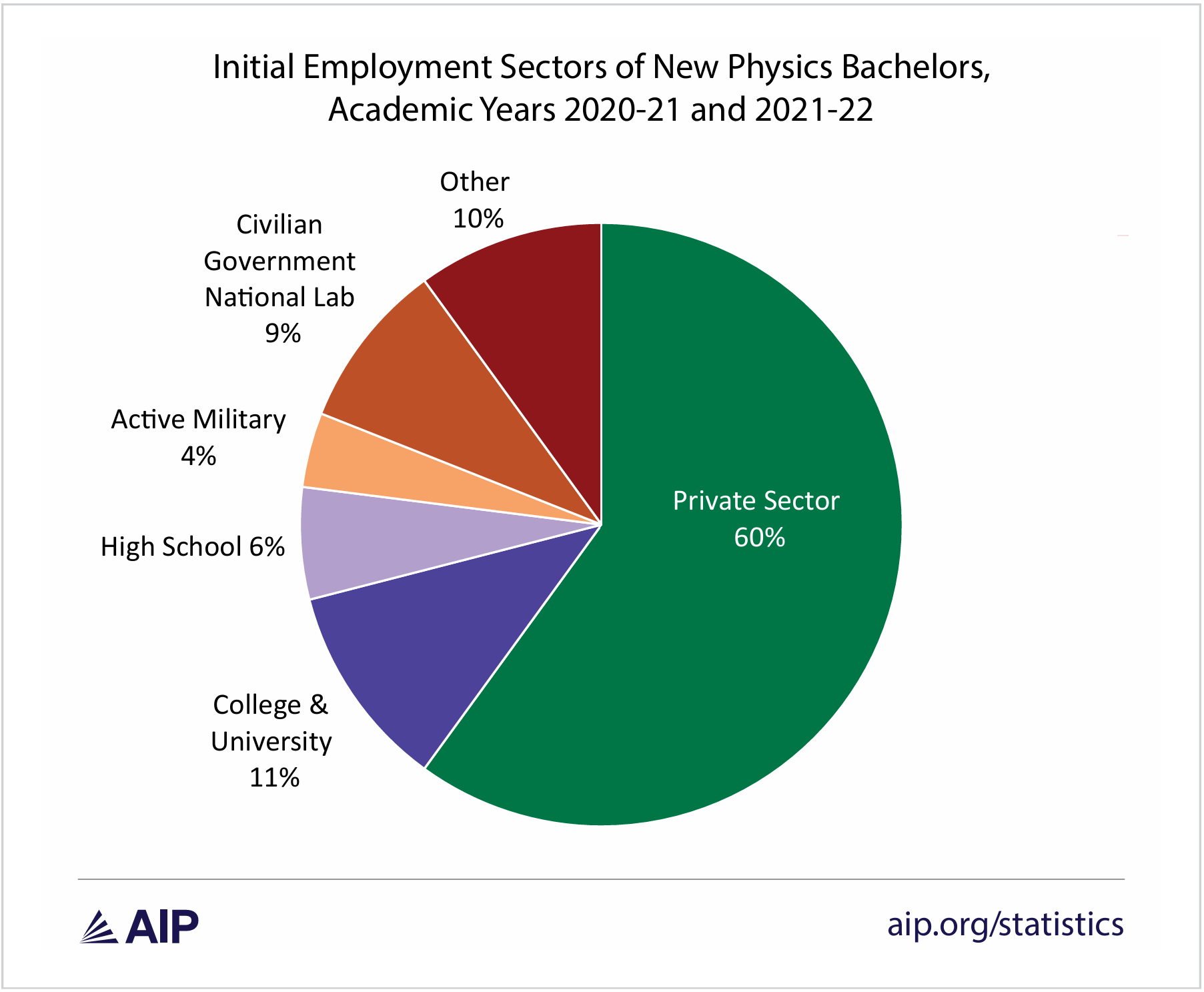
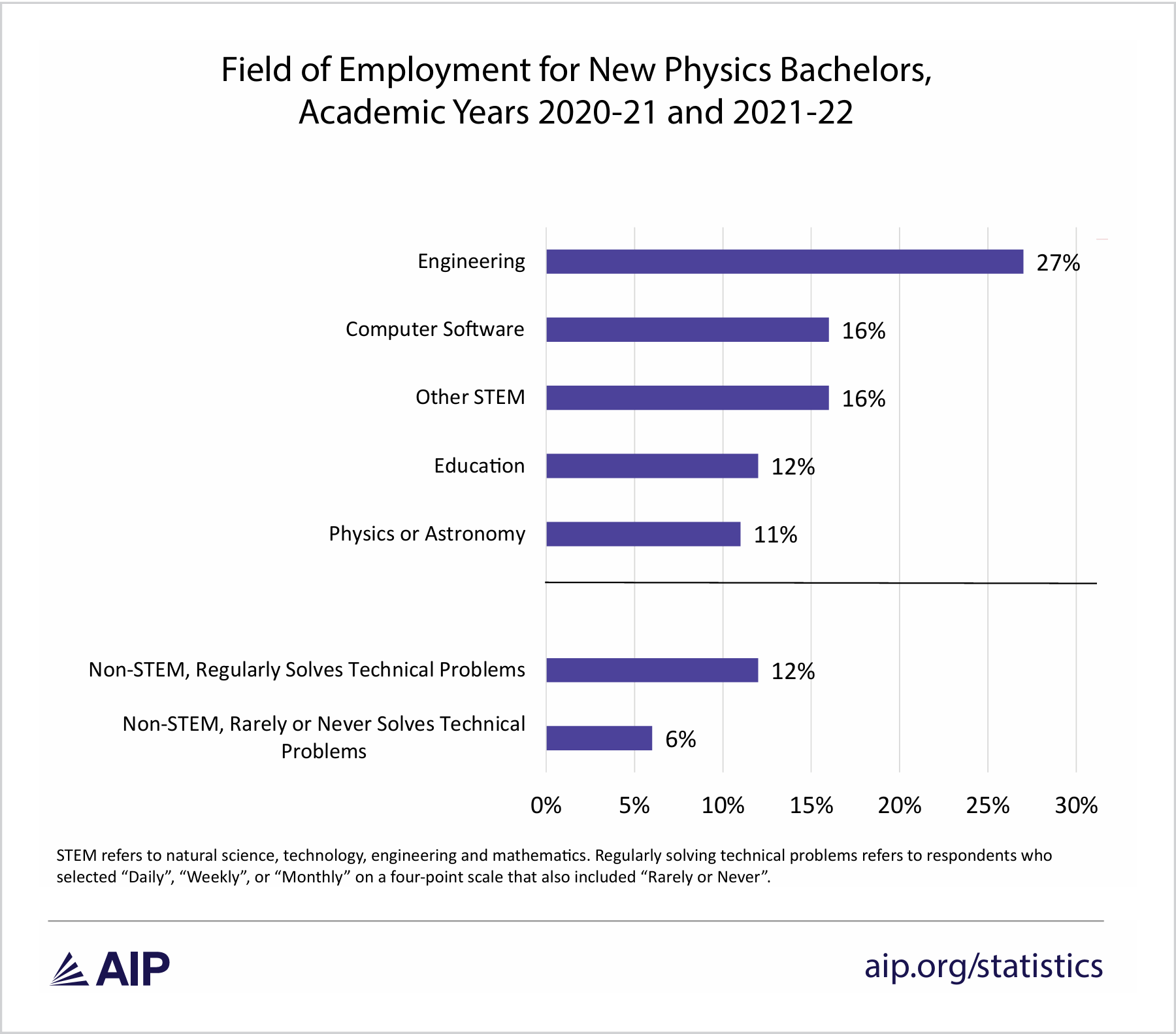
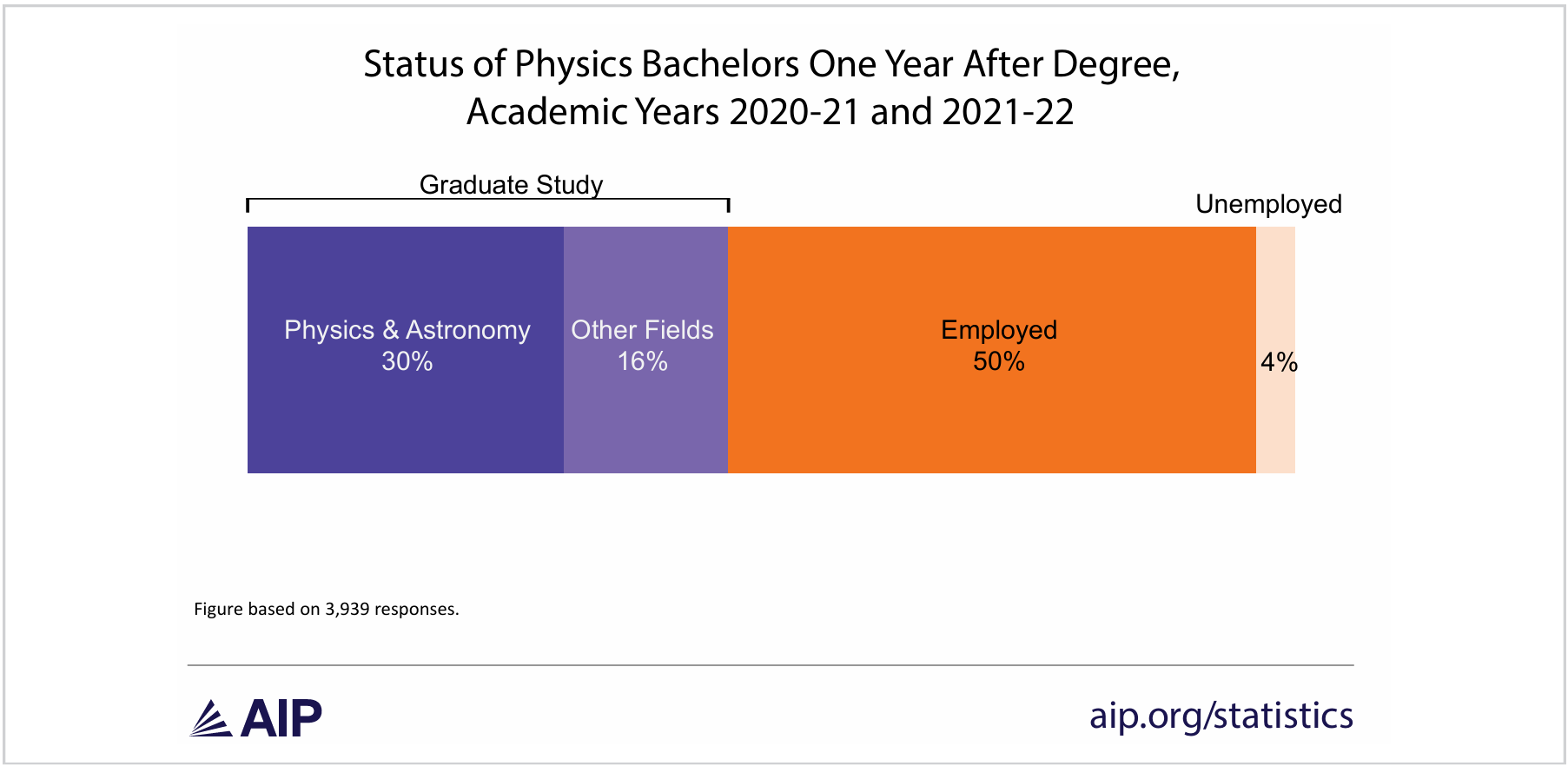
Nationally, about half of B.S. Physics majors are employed 1-year post-graduation; the rest mostly go to graduate school.

B.S. Physics: employment outcomes

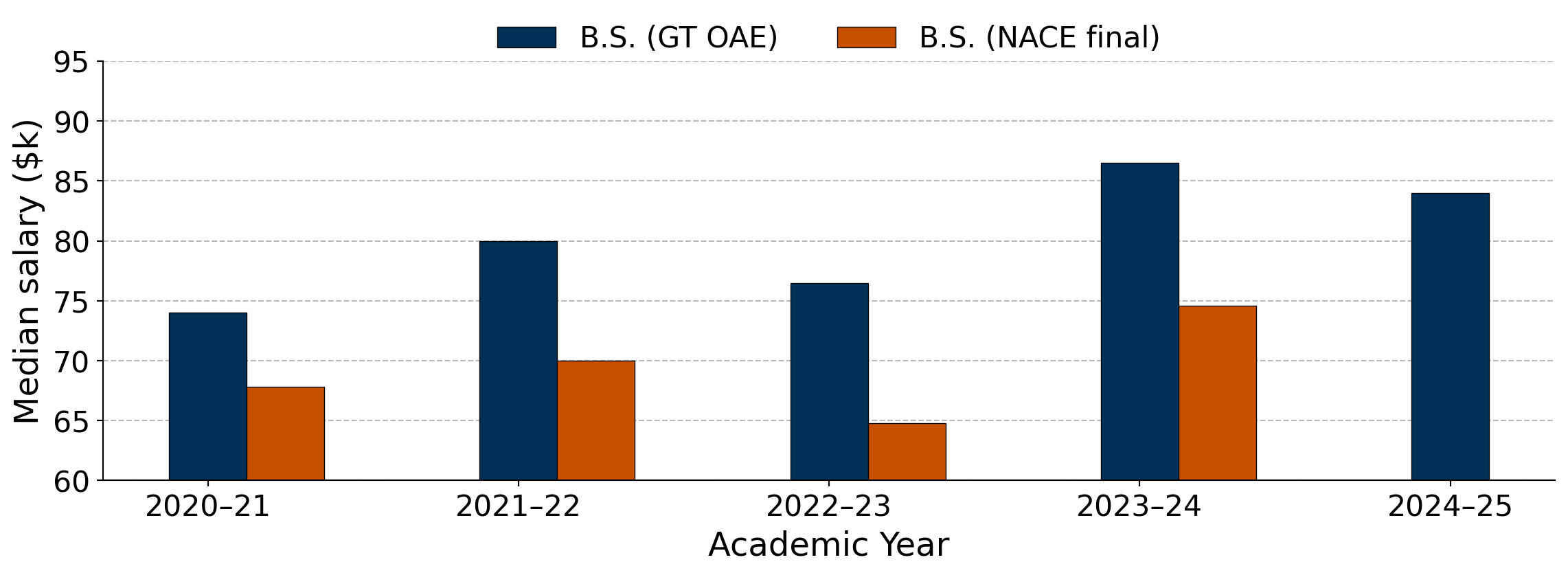
GaTech B.S. Physics: starting salaries

Reported initial median salaries range from $74,000 to $86,500 and are competitive or in excess of national trends reported by NACE.

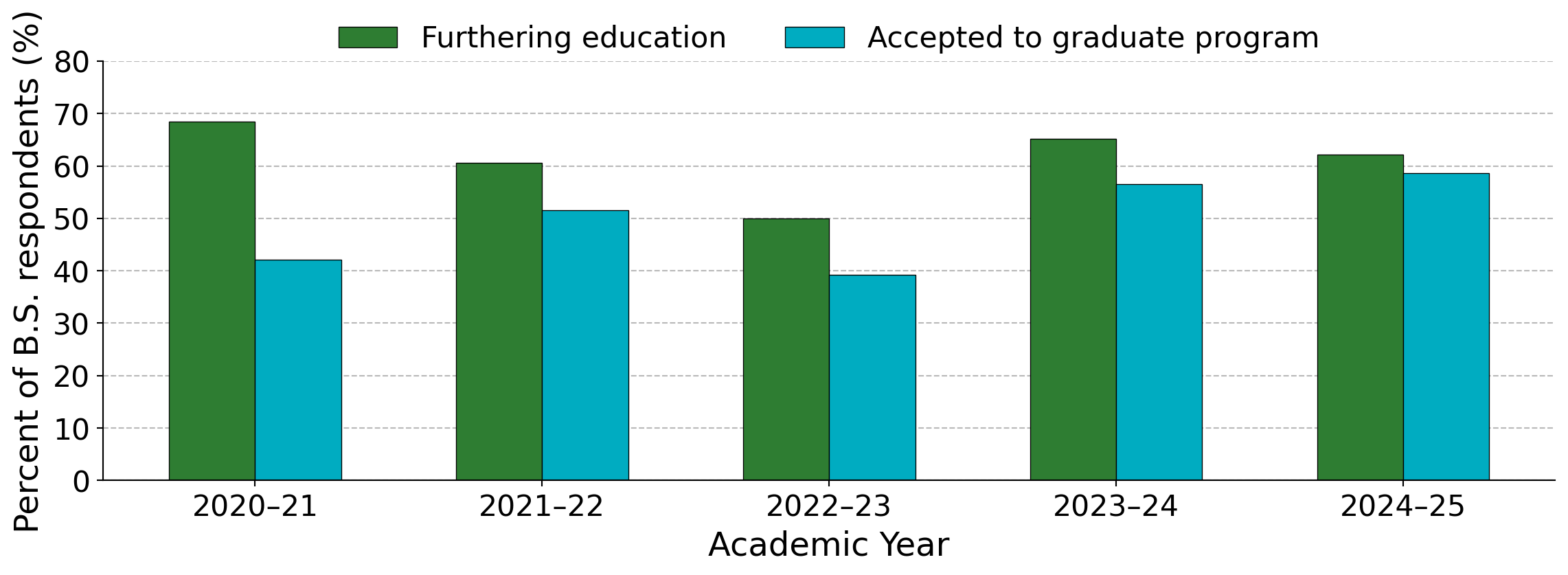
GaTech B.S. Physics: graduate acceptance

Most Georgia Tech B.S. Physics majors who intend to further their education are accepted into at least one graduate school by graduation.

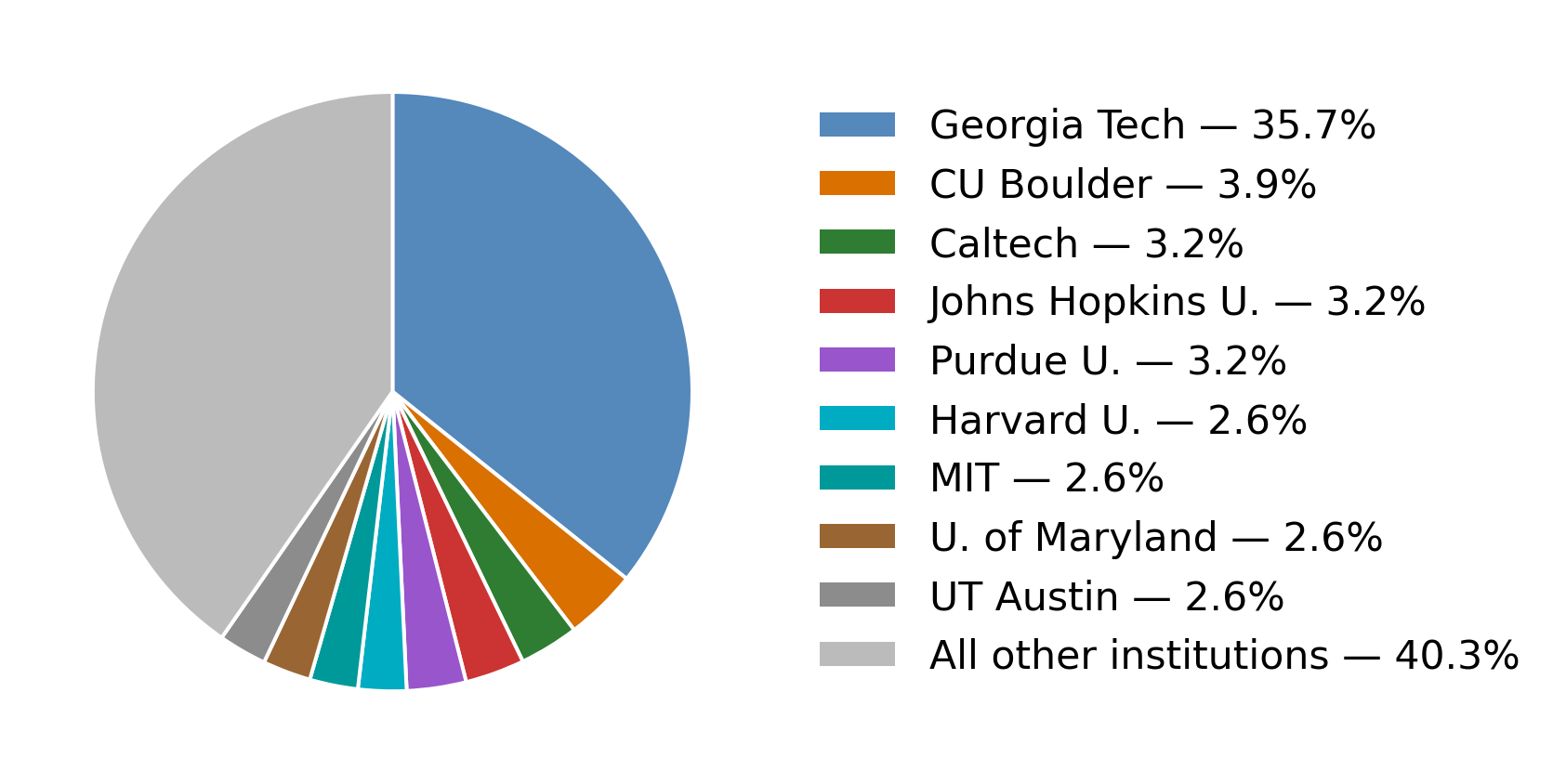
GaTech B.S. Physics: graduate destinations

Georgia Tech B.S. Physics majors are accepted to a wide range of highly ranked institutions for graduate study.

Part II: September career fair events

Career Center events (see GT Campus Calendar):

  • Sept. 8: GT Career Center: In-Person Resume Reviews
  • Sept. 9: Supply Chain Day Career Fair
  • Sept. 9: GT Career Center: Virtual Resume Reviews
  • Sept. 10: GT Career Center: Virtual Resume Reviews
  • Sept. 14: Fall 2026 All Majors Career Fair
  • Sept. 15: Fall 2026 All Majors Career Fair
  • Sept. 17: Fall 2026 College of Computing Career Fair
  • Sept. 21: Fall 2026 IISE Career Fair

The career fair is about 2 weeks away

The Fall 2026 All Majors Career Fair is September 14–15 at Georgia Tech.

Your resume is due September 11 before the fair begins.

The goal of today’s lecture: covering what goes on a resume and how to start writing one if you haven’t done so already.

Part III: Resumes

A resume is typically organized into six sections:

  1. Contact information
  2. Education
  3. Experience
  4. Skills
  5. Projects and leadership
  6. Awards and honors (optional)

Not every resume looks the same. The order and emphasis depend on your background and the opportunity.

Resume vs. academic CV

Resume Academic CV
Length 1–2 pages No limit; grows over time
Purpose Fit for a specific role Full academic and professional record
Used for Jobs, internships, most undergrad opportunities Grad fellowships, faculty positions, postdocs
Customization Tailored to each application Updated over time

For most of you a resume is your concern. A CV will come later during graduate school, as publications, talks, and grants accumulate.

See this supplemental for more detail.

Contact information

Make this easy to find — usually at the top of the page.

  • Full name (prominent and consider a slightly larger font)
  • Professional email address (GT email is fine)
  • Phone number
  • LinkedIn profile URL (optional)
  • GitHub or portfolio URL (optional)
  • City and state; no full street address needed

Education

  • Georgia Institute of Technology
    • B.S. Physics / Astrophysics / Applied Physics (or joint degree)
    • Expected graduation: May 2027 (or your actual date)
    • GPA: include if ≥ 3.0 (judgement call)
  • Relevant coursework (optional, useful if experience is thin)
  • Academic honors: Dean’s List, scholarships, etc.

List your most recent degree first. If you attended another institution, include it.

Experience

The most important section for most employers.

Include: work, research, internships, co-ops, teaching assistantships

For each entry:

  • Organization name and your role or title
  • Dates; month and year (e.g., May 2025 – Aug. 2025)
  • Location (city, state) or “Remote”
  • 2–4 bullet points describing what you did and what it produced

Research experience counts strongly for physics students: faculty advisors, national labs, REUs.

Writing strong bullets

The most common mistake: describing duties instead of accomplishments.

Weak Strong
Helped with research in the lab Analyzed detector calibration data in Python; results incorporated into weekly group reports
Responsible for data analysis Developed signal-processing pipeline in MATLAB, reducing analysis time by 40%
Worked on simulations Implemented Monte Carlo simulation of particle trajectories in C++; validated against published results

Lead with a strong action verb. Quantify where you can.

Skills

List technical skills and the specific tools and languages you actually know.

Programming and Software Python, MATLAB, C/C++, Julia, Mathematica, LaTeX, Git, Linux/bash, etc.

Laboratory and Instrumentation List specific instruments, techniques, or equipment relevant to your work

Other Data analysis, scientific writing, numerical methods

Do not list generic software (Word, PowerPoint) unless the role specifically requires it.

Projects and leadership

Valuable if work or research is limited and generally worth including.

Technical projects

  • Computational or experimental class projects with real results
  • Independent projects, open-source contributions

Leadership and service

  • Club officers, SPS (Society of Physics Students), outreach programs
  • Teaching or peer tutoring roles

Describe these the same way you describe other experience.

Formatting

Keep it clean and professional.

  • One–two pages for most undergraduates
  • Consistent fonts: one or two at most; no smaller than 10 pt for body text
  • Adequate white space: do not cram everything in
  • Consistent alignment of dates and section headers
  • No photos, no graphics, no colored text
  • Typos and grammar errors are disqualifying. Proofread!

Georgia Tech Career Center — Resume Guidance

Upcoming schedule

  1. Start your resume draft or revisit the one you have.
  2. Bring it to class next Friday (September 4), we will workshop drafts in class.
  3. Resume is due: September 11 at 11:59 PM ET to Canvas as PDF.
  4. Career Fair: September 14–15, counts as External Participation credit.

References

Georgia Institute of Technology Institutional Research and Planning. 2026. Graduate-Granting Institutions Attended by Bachelor of Science in Physics Alumni Who Graduated Between Academic Years 2021 Through 2025. No. UR0083979. Georgia Institute of Technology.
Georgia Institute of Technology Office of Academic Effectiveness. 2021-2025. Career and Salary Survey. Georgia Institute of Technology. https://www.oae.gatech.edu/.
Mulvey, Patrick, and Jack Pold. 2025. Physics Bachelors Initial Employment: Academic Years 2020–21 and 2021–22. American Institute of Physics Statistical Research Center. https://doi.org/10.1063/sr.aa204240a3.
National Association of Colleges and Employers. 2021-2026. Salary Survey: Winter Report. National Association of Colleges and Employers. https://www.naceweb.org/research/.
National Association of Colleges and Employers. 2022-2025. Salary Survey: Summer Report. National Association of Colleges and Employers. https://www.naceweb.org/research/.