Peer Feedback
GT 1000: First-Year Seminar, Physics
1 Why Peer Feedback Often Fails
The typical experience of peer feedback goes something like this: you trade papers with a classmate, quickly skim each other’s work, write “good introduction” and circle a few typos, and call it done. Nothing changes. Nobody learned anything.
That version of peer review fails because the feedback is vague, generic, and not connected to what the document actually needs to do (Roberts 2016). The goal here is feedback that the author can act on, from a reader who has thought seriously about the document.
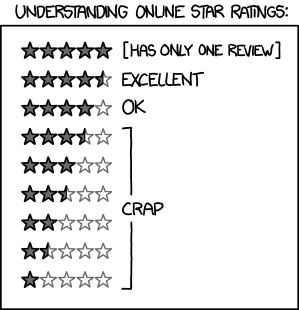
Peer feedback is a professional skill. In research, your labmates, collaborators, co-authors, and dissertation committee will all read and critique your work before it reaches a journal or grant panel.
2 Benefits of Peer Review
Before you begin, it helps to recognize what peer review is actually good for (Kuyyogsuy 2019):
- You see how other students interpreted the same assignment and solved the same problems.
- You receive feedback from someone with no authority to grade you. The stakes are lower and the conversation can be more honest.
- You have a chance to ask questions and get them answered before final submission.
- You practice the workforce skill of giving and receiving effective criticism, which every professional environment requires.
3 Prepare Before You Read
Most of what separates useful feedback from useless feedback is preparation. Taking time to understand how to perform peer review will make your feedback more valuable and give you confidence in giving it (Brammer and Rees 2007).
3.1 Understand Your Position
As a peer. You are at the same level as the author. You have no authority to demand changes. You are there to offer suggestions and recommendations, not edicts. The author decides what to do with your feedback.
As a reader. You may feel unqualified to evaluate another person’s writing, but you already evaluate movies, restaurants, and sports teams without being an expert in any of them. You do this because you know when something works for you as an audience member. You know when you are confused, bored, persuaded, or engaged. That is exactly the qualification you need here.
3.2 Understand the Document
Every document is meant to communicate something for a specific purpose within a set of expected boundaries:
- Requirements. What are the absolute requirements? Did the document meet them? Consult the specific requirements of the assignment.
- Purpose. What is the document trying to accomplish? Getting a job? Demonstrating a valid research program?
- Audience. Who is this document written for? A recruiter? A graduate admissions committee?
- Subject. Does the document stay on topic? Are there sections, arguments, or details that do not serve the document’s stated purpose?
A resume here could go to an actual employer. A personal statement could go to an actual graduate program. Evaluate the document against the real-world audience it is intended to reach.
4 Providing Feedback
All feedback ultimately boils down to the following logical construction: “My reaction is X, because of Y.” This structure is how all your major feedback, both positive and negative, should be delivered.
The word “because” (or equivalent language) is an excellent way to link your reaction to a document and the reason for your reaction.
4.1 Make Positive Comments
It matters that the author hears what is working. Praise that is specific helps the author know which choices to keep and repeat.
| Weak | Strong |
|---|---|
| “Good introduction.” | “The opening is good because it immediately names the specific lab technique you want to improve and why it is important.” |
| “I liked the research section.” | “The research motivation connects your goal directly to an open question in the field, not just a general area of interest.” |
You often will know whether or not you like a piece of writing before you’ve consciously identified why. Don’t fret if it takes you a little time to pinpoint the reason why you like something. This sort of self-reflection is a powerful skill.
4.2 Give Constructive Criticism
While simple critique still follows the “My reaction is X, because of Y” formula, constructive criticism takes it one step further by offering a potential solution: “My reaction is X, because of Y, therefore I suggest Z.”
While we should always strive towards constructive criticism, it is inherently more difficult. Sometimes you’ll only have the time and mental bandwidth to point out issues without necessarily knowing how to fix things, especially if the issues are extensive.
Constructive criticism gives the author a direction for how to make their work better. Focus your criticism in three layers:
Requirements. Did the document meet the stated requirements? If something is missing, point it out directly. Those are points the author will lose (or an immediate job rejection) if you do not flag them.
Meaning. Is it clear what the document is saying? Are claims supported with evidence? Are there places where you wanted more, or where you still had unanswered questions? These are the comments that matter most for revision.
Speed bumps. A speed bump is anything that stops your reading: a sentence that confused you, a transition that did not land, a word choice that felt off, a section that seemed to lose focus. Pay attention to what your brain does as you read. It will usually signal when something needs revision.
You do not have to be right. Your job is to report what you experienced as a reader. The author decides whether to act on your observation.
5 How to Structure Your Written Response
A clear structure makes your feedback easier to use.
- Opening summary. One or two sentences on your overall impression. What is working? What is the most important thing to address?
- Major comments. Two to four substantive observations about content, structure, audience fit, or meaning. Identify a specific location in the document for each comment, explain the issue, and suggest a direction for improvement.
- Minor comments. Smaller issues: phrasing, formatting, word choice, typos. Worth noting, but should not dominate your response unless such issues are severe.
- Closing. What is the document’s strongest aspect? What single revision would most improve it?
Spend the most time on the major comments. A review that is mostly a list of typos is not helpful as proofreading is the author’s responsibility. What they need is your perspective on whether the document is doing its job.
6 Common Mistakes in Peer Review
| Mistake | Why It Fails | Better Approach |
|---|---|---|
| “This looks great!” | Offers nothing the author can act on | Identify something specific that works and something that could be stronger |
| “This is confusing.” | Does not say where or why | Quote the specific passage and explain what confused you |
| “I would have done it differently…” | Imposes your approach | Ask whether the author’s choice serves their purpose, then offer an alternative as a suggestion |
| Fixing only surface errors | Misses content and structure, which matter more | Address meaning and organization first, then surface polish |
| Softening every criticism | Author cannot tell what actually needs work | State problems clearly while keeping the tone professional |
7 Receiving Feedback
You will also receive peer feedback on your own documents. How you receive it matters.
- Listen without immediately defending. You do not need to agree with every comment, but understand what the reviewer is responding to before you decide whether to act on it.
- Ask clarifying questions if you do not understand what a comment is pointing to.
- Separate the diagnosis from the solution. A reviewer may correctly identify a problem but suggest a fix that does not fit your document. Take the diagnosis seriously even if you choose a different approach.
- You are not obligated to make every suggested change, but you should be able to explain to yourself why you are not making it.
A reviewer’s job is to tell you how the document is landing on a reader. What you do with that information is your decision.
8 A Note on Tone
Professional feedback should be direct but not unkind. You can be honest without being dismissive, and specific without being harsh. The standard to aim for is the kind of feedback a thoughtful colleague or mentor would give.
Sharing your writing may make you feel vulnerable, which is completely normal. Feedback that is honest and encouraging is one of the most useful things you can offer a peer.
9 References
The peer review framework presented in this page is adapted from Jason Roberts, “Making a Peer Review More Than a Waste of Time,” in Open English @ SLCC (Roberts 2016). Open English @ SLCC Copyright © 2016 by SLCC English Department · CC BY-NC 4.0.